SodaSlim Official Website › Guides
GuidesTwo longer guides to reading a metabolism supplement label
Two pieces that are about the category rather than about one bottle. The first is a guide to how metabolism formulas are built and what their ingredients have actually been shown to do. The second is a practical method for comparing two labels in a shop, which takes about four minutes and rules out most of a shelf.
Written to be useful whether or not you buy anything from this desk.
What is in these two guides
A metabolism supplement guide
What the six ingredient families in this category are, which of them have randomised human evidence, at what amounts, and what a standardisation figure means. About two thousand words, with every claim linked to a published record.
Choosing a metabolism supplement
A four-minute method for comparing two labels: what to look for first, the four questions that eliminate most products, and the two marks that look like certification and are not.
Why a retailer publishes guides that rule out its own product
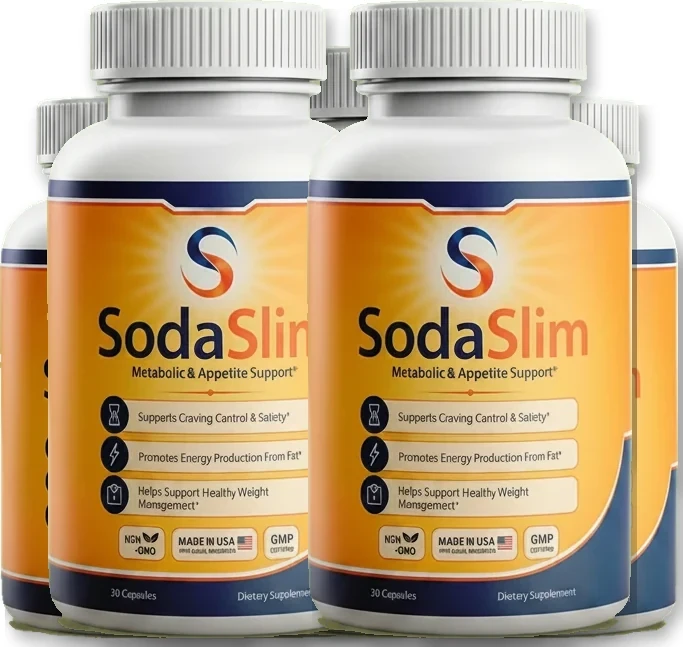
Both guides contain material that counts against the bottle this desk sells. The label-reading method starts with a Supplement Facts panel, and this product's artwork does not carry one.
That is deliberate. A guide written so that its own product always wins is not a guide; it is a comparison chart with one column filled in. Anybody who has read a few of those can tell immediately, and the damage it does to the rest of a website is larger than whatever it sells.
So the method is the one this desk would actually use, applied honestly, and the consequence is stated where it belongs: on the ingredients page, which says plainly that no panel exists.
How to use these two guides together
They are written to be read in either order and they do different jobs, so a reader with twenty minutes should probably take them one way and a reader standing in a shop the other.
With time, read the ingredient guide first. It explains what each of the six families in this category actually is, what has been measured in people, and at what amount, which is the background that makes a label legible in the first place. It takes about ten minutes.
In a hurry, go straight to the four questions. They can be applied to a bottle you have never seen before, in about four minutes, without knowing anything about the ingredients. Most of a shelf fails question one, which is what makes the method fast.
Together they answer two different things: what is worth taking, and what is worth believing on the back of a bottle. The second question is the one most buyers never get to and it is the one that saves money.
What a guide can and cannot do for a reader
Neither of these pieces can tell you whether a particular supplement will work for you. What they can do is narrower and more useful: teach a method for reading a label, so that the next twenty products you see take four minutes each instead of an afternoon.
The method rests on one idea. The front of a supplement bottle is advertising and the back is a document, and almost every question worth asking is answered on the back or not at all. A formula that prints an amount for every active can be compared with published research; one that does not, cannot, whatever its front panel promises.
The second idea is that a mechanism is not a result. Every ingredient in this category has a mechanism, usually a plausible one, often demonstrated in cells or in rodents. The question a guide should help with is which of those mechanisms has been tested in people, at what amount, and with what outcome.
Both guides are written so a reader can apply them to a product sold by somebody else, which is the only way to know whether a method is real.
Where the two guides disagree with this website's own product
Three specific places, named here so nobody has to hunt for them.
- The label-reading method begins with a Supplement Facts panel. This product's artwork carries none, so it fails the first question.
- The method asks for a standardisation figure on each extract. None appears on this label, so the green coffee and green tea rows cannot be compared with their trials.
- The method asks for a total caffeine figure. Two of five rows here carry caffeine and neither is quantified.
The ingredients page says all three in its own words and sets the trial amounts beside the five names anyway, which is the most a reader can be given when the label gives nothing.
Who writes these guides
The sources cited across both pieces, and who wrote them.
- Kanchanasurakit S, Saokaew S, Phisalprapa P, et al. Chlorogenic acid in green bean coffee on body weight: a systematic review and meta-analysis of randomized controlled trials. Syst Rev. 2023;12(1):163. PMID 37710316. https://pubmed.ncbi.nlm.nih.gov/37710316/
- Heymsfield SB, Allison DB, Vasselli JR, et al. Garcinia cambogia (hydroxycitric acid) as a potential antiobesity agent: a randomized controlled trial. JAMA. 1998;280(18):1596-600. PMID 9820262. https://pubmed.ncbi.nlm.nih.gov/9820262/
- Jurgens TM, Whelan AM, MacDonald L, et al. Green tea for weight loss and weight maintenance in overweight or obese adults. Cochrane Database Syst Rev. 2012;12(12):CD008650. PMID 23235664. https://pubmed.ncbi.nlm.nih.gov/23235664/
- Tabrizi R, Saneei P, Lankarani KB, et al. The effects of caffeine intake on weight loss: a systematic review and dos-response meta-analysis of randomized controlled trials. Crit Rev Food Sci Nutr. 2019;59(16):2688-2696. PMID 30335479. https://pubmed.ncbi.nlm.nih.gov/30335479/
- Oketch-Rabah HA, Roe AL, Rider CV, et al. United States Pharmacopeia (USP) comprehensive review of the hepatotoxicity of green tea extracts. Toxicol Rep. 2020;7:386-402. PMID 32140423. https://pubmed.ncbi.nlm.nih.gov/32140423/