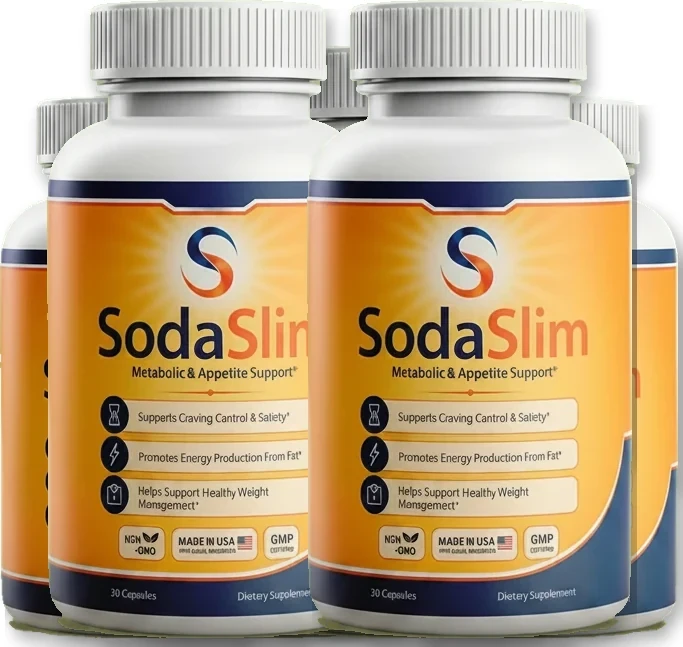
SodaSlim Official Website › Blog › A Label With No Panel
What To Do When A Supplement Label Has No Panel
A Supplement Facts panel is the only part of a bottle that lets you compare what you are holding with what was tested. When one is missing entirely, most of the usual advice about reading labels stops working. Here is what is left, and how far it gets you.
Why the panel is the only part that matters
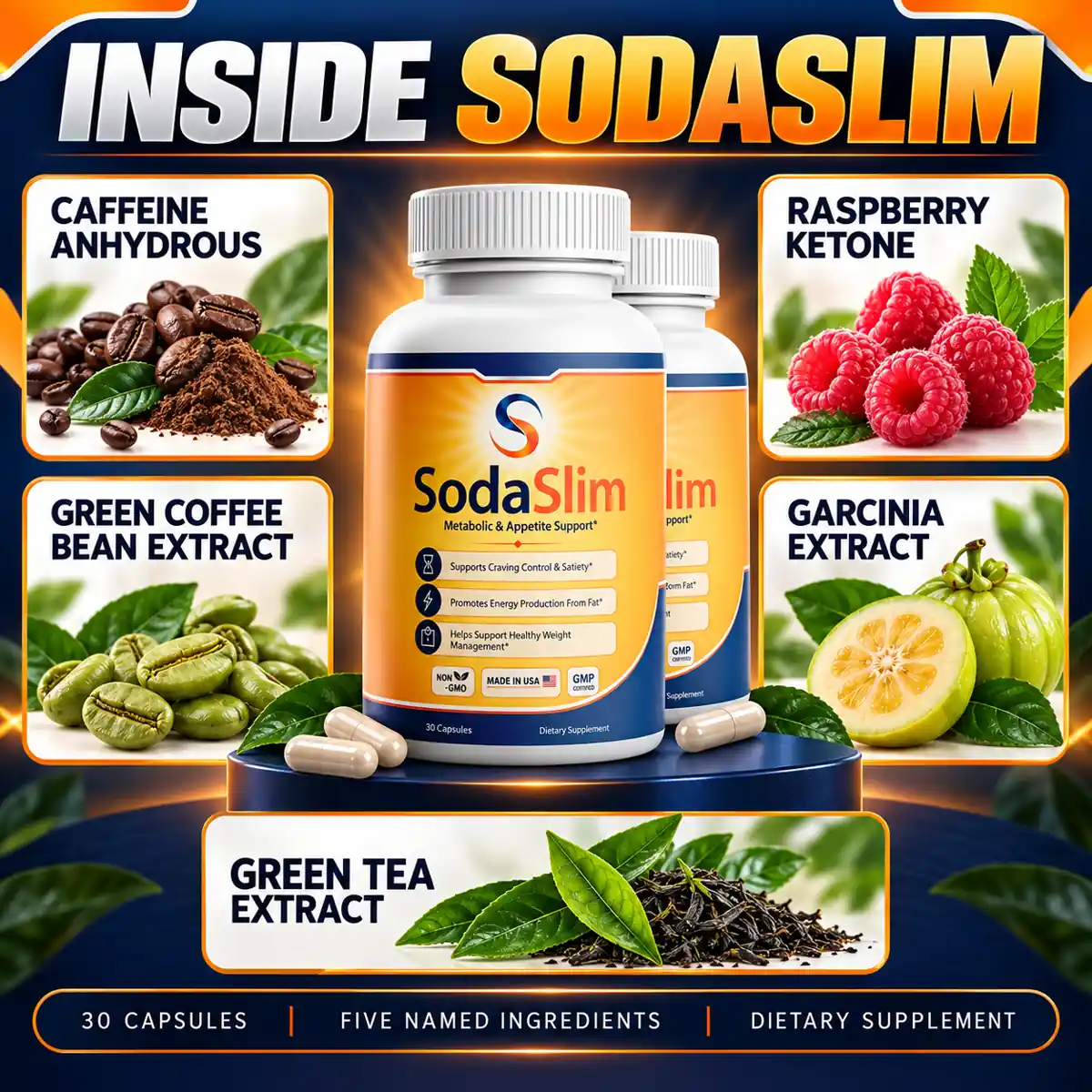
The front of a supplement bottle is advertising. It carries the brand, a line about what the product supports, and a row of marks that mostly describe the factory rather than the capsule. None of it can be checked and none of it is meant to be.
The back is a document. A Supplement Facts panel is a regulated format, it lists what is in a serving and how much, and it is the only part of a bottle that can be compared with a published trial. Everything a careful buyer wants to know is answered there or is not answered at all.
That is why the absence of a panel is a bigger event than it first appears. It is not one missing detail among several; it is the removal of the entire basis on which a product can be assessed from its packaging.
| What a complete panel gives you | What it lets you do |
|---|---|
| A serving size and servings per container | Work out what a day costs and how long a bottle lasts |
| An amount in milligrams beside every active | Compare each row with the amount its published trials used |
| A standardisation figure on each extract | Know how much of the active compound a weight of extract carries |
| A proprietary blend total, where one is used | See the ceiling on every row inside it, even without the split |
| An other-ingredients line | Find the capsule shell, the flow agents and the allergens |
| A caution naming specific symptoms | Recognise the signal that means stop before it becomes a problem |
Six things a Supplement Facts panel does. A label missing the panel entirely is missing all six at once, which is a different situation from a proprietary blend.
Notice how many ordinary questions depend on that table. How much caffeine am I taking? What is the capsule made of? Every one of them lives in the six rows above.
Three situations, in descending order of usefulness
Labels in this category fall into three groups, and they are frequently confused with one another because all three feel unsatisfying to a reader.
A full panel, with amounts
The best case, and more common than it used to be. Every active has a number beside it, every extract has a standardisation figure, and a reader can line the label up against the research in about four minutes. Roughly a third of what is on a pharmacy shelf now looks like this. It is the situation a 2023 chlorogenic acid meta-analysis assumes when it pools trials at 500 mg of chlorogenic acid a day: somebody has to be able to tell how much they are taking.
A proprietary blend, with a total
The middle case and the most common one in direct-response supplements. The panel prints a blend name, a total weight, and the ingredients inside it in descending order by weight.
This is worse than a full panel and better than nothing, and the difference matters. A blend totalling 500 mg with eight names in it has told you that no single row exceeds 500 mg, that the first name is the largest and that the last is the smallest. If the sixth name is the one a trial used at 500 mg a day, you already know this product does not deliver it.
Names with no amounts at all
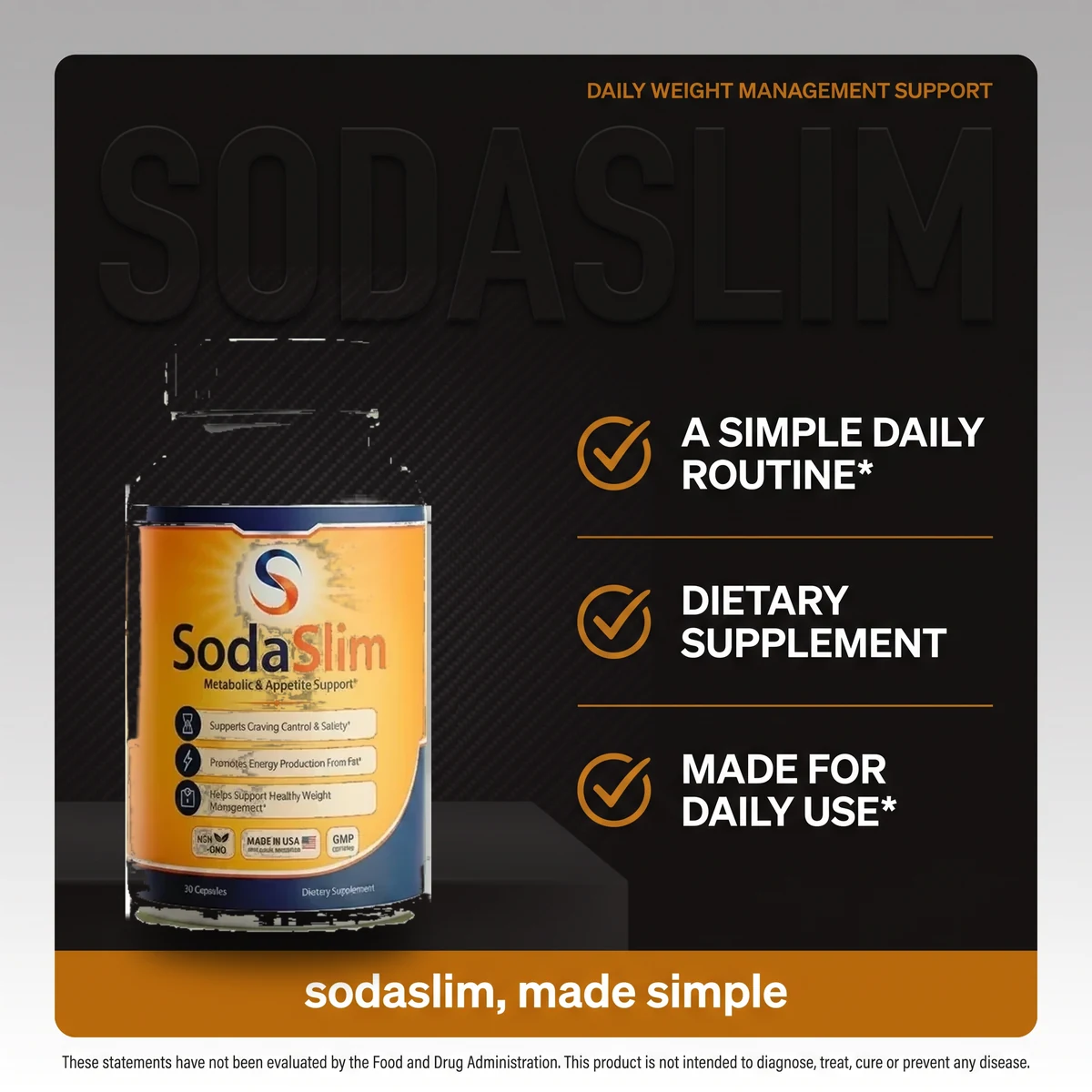
The third case, and the one this article is about. A graphic, a list or a front panel names the ingredients and no number appears anywhere. There is no total to put a ceiling on, no ordering to read, and nothing to compare.
It is worth being precise about how unusual this is. A proprietary blend withholds the split while admitting the sum. A label with no panel withholds the question.
| If the label has | You can still | You cannot |
|---|---|---|
| A full panel with amounts | Compare every row with published research and total the caffeine | Know whether the contents match the label without an independent assay |
| A proprietary blend with a total | Put a ceiling on every row and read the descending weight order | Know how the total splits, so a lead ingredient may be most of it |
| Ingredient names and no amounts at all | Read what each name has been studied at, and judge the plausibility | Compare this product with any trial, because there is no figure to compare |
| A front panel of claims and nothing else | Ask the seller directly, and treat silence as an answer | Do anything useful from the packaging alone |
Four situations in descending order of what a reader can do. Most of this category sits in the second row; this one sits in the third.
What you can still do with names alone
Four things, and they are genuinely worth doing even though none of them tells you what is in the capsule.
- Read what each name has been studied at. The research amount is a fixed number and it does not depend on the label. If a trial needed 1,500 mg a day of hydroxycitric acid to produce nothing, as the 1998 randomised trial in JAMA found, then a smaller unnamed amount is not going to produce more.
- Count the ingredients. A capsule has a physical volume. Five actives at their researched amounts frequently add up to several grams a day, which no single capsule holds, so the arithmetic tells you something even when the label does not.
- Identify the ones carrying a stimulant. Caffeine has a daily ceiling and you have to stay inside it. Any row that carries caffeine is a row you need a figure for, and its absence is a practical problem rather than an academic one.
- Check whether any of the names has no human evidence. Some ingredients in every category are there for the front panel rather than for the formula, and that is checkable from the name alone.
None of those four requires the panel. All four are worth ten minutes, and together they usually settle the question.
The plausibility test, and how to run it
This is the most useful thing a reader can do with a panel-free label, and it takes about five minutes with a search engine.
Look up the amount each named ingredient was used at in its trials. Write the numbers down. Add them up. Then ask whether a single capsule of the size you are holding could plausibly contain that total.
A worked example makes the point faster than a description. Take five ingredients of the kind that appear on metabolism labels and look up what each was tested at:
- Green tea extract: 270 mg of EGCG a day across three meals, in the 1999 respiratory-chamber study.
- Green coffee bean extract: 500 mg of chlorogenic acid a day or more in the pooled trials.
- Garcinia extract: 1,500 mg of hydroxycitric acid a day in the largest randomised trial.
- Caffeine: 100 to 400 mg a day, with 400 mg the healthy-adult ceiling in the 2017 systematic review of caffeine safety.
- A fifth ingredient with no human trial at all, which contributes nothing to the total and nothing to the argument.
That is well over two grams a day of active material before any filler, any flow agent and any capsule shell. A single daily capsule cannot hold it. So at least some of those ingredients must be present at less than the researched amount, and a reader has established something real without seeing a single number on the label.
What the test cannot do is tell you which ones. That is precisely the information a panel supplies and precisely what is missing.
- Write down what each named ingredient was studied at, per day.
- Add the figures together.
- Compare the total with the physical capacity of one capsule.
- If the total is larger, at least one row is below its trial amount.
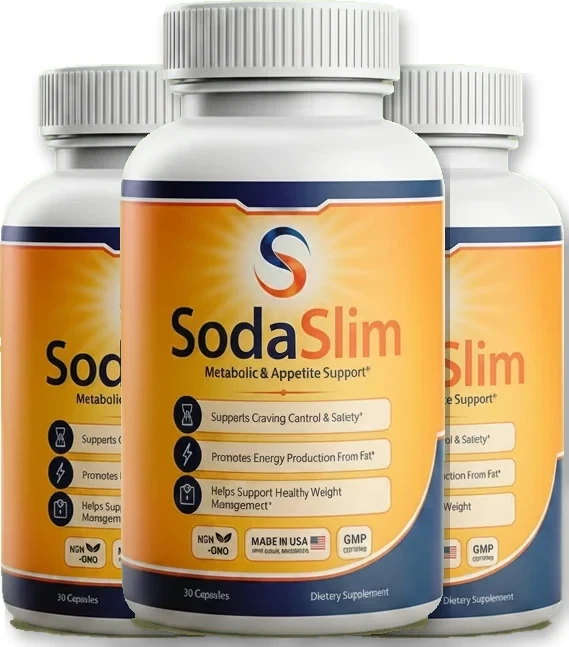
SodaSlim names five ingredients and prints no amounts
This desk sets each of the five against the amount its published trials used, says which one has no human trial at all, and runs the plausibility test above on its own product's ingredients page.
Two bottles $158 · six bottles $294 · 60-day money-back guarantee
Order SodaSlim On The Official WebsiteOne capsule each morning · 30 per bottle · lot SOD-26/SO-1634
What to ask a seller, and how to read the answer
A panel-free label leaves one route open: ask. Most direct-response sellers have an order desk with a telephone number, and three questions cover almost everything.
- What is the capsule shell? Gelatin or a plant-based alternative. This decides the product for anyone avoiding animal products and it is a fact the seller knows.
- Is there a Supplement Facts panel on any current batch? Artwork changes. A panel may exist on a bottle the published images do not show.
- What is the caffeine content of one capsule? Where two rows carry caffeine, this is the number a buyer most needs and the one most likely to be refused.
How the answers come back is informative in itself. A desk that answers the first two immediately and declines the third is telling you something true about how the product is formulated. A desk that cannot answer any of the three is telling you something else.
Treat a non-answer as an answer. It is not rudeness and it is not usually evasion: a retailer frequently does not hold the formulation. But a fact nobody will confirm is a fact you cannot rely on, and that should feed into the decision rather than be set aside.
How to decide when the answer does not come
At some point a reader has to buy the bottle or not, and the panel is not going to appear. Three considerations settle most cases.
What the product is actually being bought for
A formula bought for a stimulant effect is one where the missing figures matter enormously, because caffeine has a ceiling and an unquantified dose cannot be budgeted. A formula bought as one part of a routine, where the daily habit is the point, is one where the missing figures matter less.
What the fallback is
A generous refund window changes the arithmetic considerably. A product with no panel and a sixty-day money-back guarantee is a different proposition from one with no panel and a fourteen-day sealed-only return policy, because the first lets you find out and the second does not.
What a similar product would cost with the information
Frequently the honest answer is not much more. If a comparable formula with a full panel and a standardisation figure sells at a similar price, the panel-free one is asking you to give up the information for nothing. If it is genuinely cheaper, that is a trade a reader can make with their eyes open.
Anybody taking a prescription medicine, particularly one where timing or absorption matters, should not take a stimulant-containing supplement whose dose is unpublished. There is no way to describe the exposure to a clinician, which makes the conversation that should settle it impossible to have.
Everything above generalises beyond one product. A panel is a small block of text on the back of a bottle and it is the difference between a product you can assess and a product you can only trust. Reading the ingredients page for any formula you are considering, including this desk's own, is where that assessment starts.
References
- Kanchanasurakit S, Saokaew S, Phisalprapa P, et al. Chlorogenic acid in green bean coffee on body weight: a systematic review and meta-analysis of randomized controlled trials. Syst Rev. 2023;12(1):163. PMID 37710316. https://pubmed.ncbi.nlm.nih.gov/37710316/
- Heymsfield SB, Allison DB, Vasselli JR, et al. Garcinia cambogia (hydroxycitric acid) as a potential antiobesity agent: a randomized controlled trial. JAMA. 1998;280(18):1596-600. PMID 9820262. https://pubmed.ncbi.nlm.nih.gov/9820262/
- Dulloo AG, Duret C, Rohrer D, et al. Efficacy of a green tea extract rich in catechin polyphenols and caffeine in increasing 24-h energy expenditure and fat oxidation in humans. Am J Clin Nutr. 1999;70(6):1040-5. PMID 10584049. https://pubmed.ncbi.nlm.nih.gov/10584049/
- Wikoff D, Welsh BT, Henderson R, et al. Systematic review of the potential adverse effects of caffeine consumption in healthy adults, pregnant women, adolescents, and children. Food Chem Toxicol. 2017;109(Pt 1):585-648. PMID 28438661. https://pubmed.ncbi.nlm.nih.gov/28438661/
- Oketch-Rabah HA, Roe AL, Rider CV, et al. United States Pharmacopeia (USP) comprehensive review of the hepatotoxicity of green tea extracts. Toxicol Rep. 2020;7:386-402. PMID 32140423. https://pubmed.ncbi.nlm.nih.gov/32140423/