SodaSlim Official Website › Blog › Raspberry Ketone
Raspberry Ketone: The Ingredient With No Human Trial
Raspberry ketone appears on a great many metabolism labels and its entire reputation rests on a 2005 study in mice, fed at one to two per cent of the whole diet. No trial of it in a human being has ever been published. This is what the evidence actually says, and how to read an ingredient that has none.
What raspberry ketone actually is
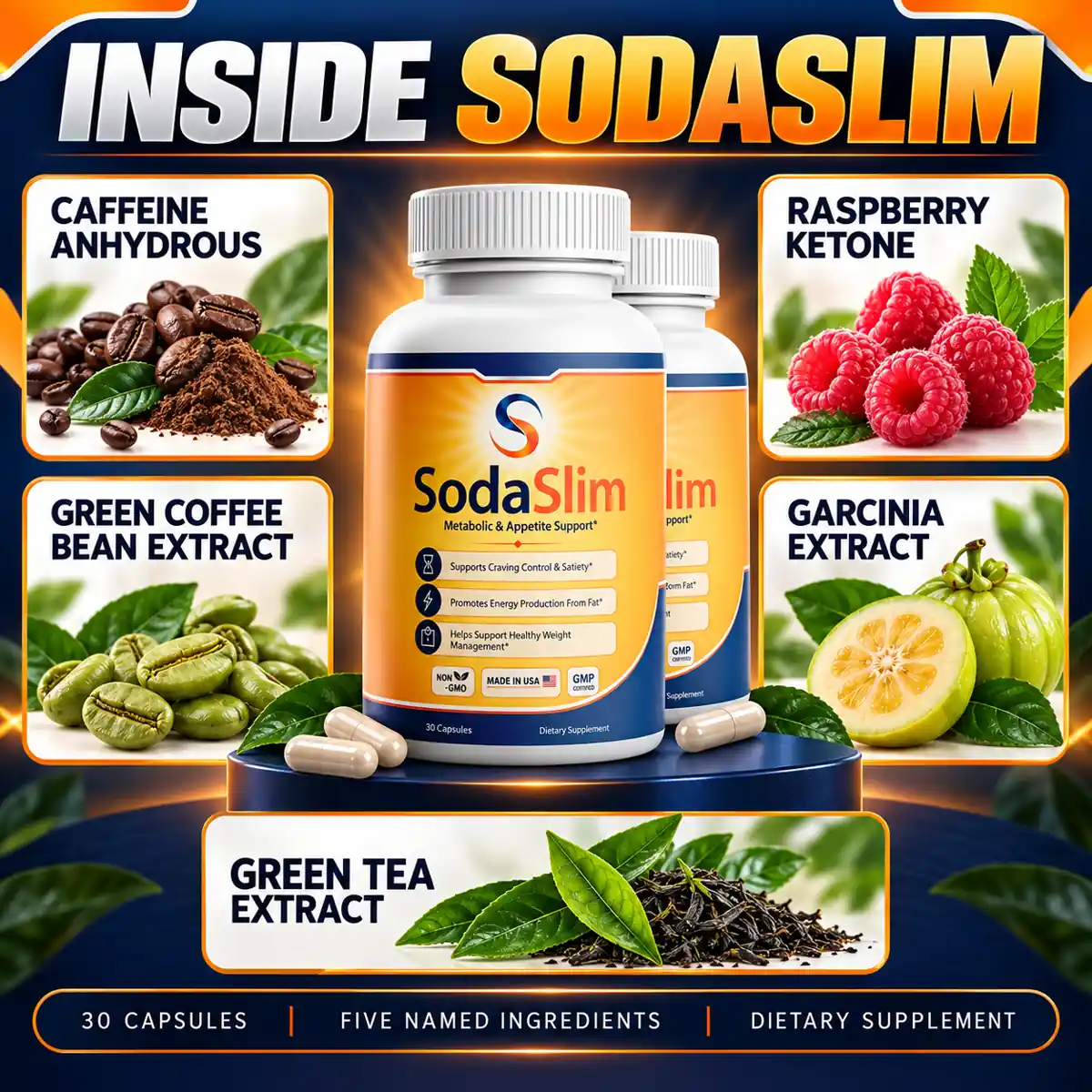
Raspberry ketone is 4-(4-hydroxyphenyl) butan-2-one, the aromatic compound largely responsible for the smell of red raspberries. It is used as a flavouring and a fragrance in enormous quantities and has been for decades.
Almost none of what reaches a supplement capsule comes from raspberries. Extracting it from fruit is expensive to the point of absurdity, because the natural concentration is a few milligrams per kilogram of fruit. The commercial material is synthesised or produced by fermentation, and the molecule is identical either way.
Its metabolic reputation comes from a structural resemblance. It looks like capsaicin, the compound that makes chillies hot, and like synephrine, a stimulant found in bitter orange. Both of those have documented metabolic effects, and the argument for raspberry ketone has always been that a similar shape ought to do a similar thing.
The 2005 study, read carefully
One paper is behind all of it. the 2005 rodent study was published in Life Sciences in 2005 by a group at Ehime University, and it is worth reading properly rather than through a summary.
The researchers ran two experiments in mice. In the first, mice were fed a high-fat diet containing 0.5, 1 or 2 per cent raspberry ketone for ten weeks. In the second, mice were fed a high-fat diet for six weeks and then switched to the same diet with 1 per cent raspberry ketone for a further five.
The results were real and clearly reported. The ketone prevented the high-fat diet raising body weight and the weights of the liver and the visceral fat pads, and it reduced those weights after they had already risen. In a separate experiment on isolated rat fat cells, it increased noradrenaline-driven lipolysis and moved hormone-sensitive lipase from the cytosol to the lipid droplets.
| What the 2005 study did | What that means in human terms |
|---|---|
| Fed mice a high-fat diet containing 0.5, 1 or 2 per cent raspberry ketone | A dietary percentage, not a capsule. At 1 per cent of food intake it is grams a day scaled to a person, not milligrams |
| Ran for ten weeks | Long enough to be a fair test in a mouse and not translatable to a human timeline |
| Measured body weight, liver weight and visceral fat pads | Endpoints a laboratory can weigh directly and a person cannot |
| Measured noradrenaline-driven lipolysis in rat fat cells | A mechanism demonstrated outside a living animal, in isolated cells |
| Reported prevention of diet-induced weight gain | A prevention finding in rodents on a controlled diet, not a loss finding in people |
Every row is read from the abstract of the 2005 Life Sciences paper cited below. Nothing in it concerns human beings.
None of that is disputed and none of it is fraudulent. It is a competent rodent study with a clear mechanism attached. The problem is entirely in what happened next, which is that it was reported as though it had been done in people.
Why a dietary percentage is not a dose
This is the crux and it is not complicated.
The mice were not given a capsule. Their food was made up to contain raspberry ketone at 0.5, 1 or 2 per cent by weight. Everything they ate, every day, for ten weeks, was between one two-hundredth and one fiftieth raspberry ketone.
A mouse eats several grams of food a day for a body weight of around thirty grams. Scaled by body weight to an adult human, the exposure is measured in grams, and by any scaling method it is orders of magnitude above what a capsule containing several ingredients could deliver.
- A supplement capsule holds perhaps 500 to 800 mg of material in total.
- That total has to cover every active ingredient plus the fillers and flow agents.
- A formula with five named ingredients divides that space five ways at best.
- The mouse study's exposure, expressed as a share of daily intake, cannot be reproduced by any of those numbers.
So the honest position is not that raspberry ketone has been disproved. It is that the only evidence for it comes from an exposure nobody takes, in a species that is not ours, over a period that does not translate.
What human evidence exists, and it is none
A search of the published literature for raspberry ketone returns synthesis chemistry, flavour work, fruit fly biology, and rodent studies. It does not return a randomised controlled trial in people, because none has been published.
The most recent rodent work, a 2024 mouse study, looked at hypothalamic inflammation in high-fat-diet obese mice nearly twenty years after the original paper. It is another animal study.
The nearest thing to a human result is a multi-ingredient supplement trial, a trial of a multi-ingredient supplement given alongside diet and exercise in overweight adults. A multi-ingredient trial cannot attribute anything to a single component, which is exactly why single-ingredient trials exist.
| Ingredient | Human trials | At what amount | What they found |
|---|---|---|---|
| Green coffee bean extract | Three pooled randomised trials, 103 people | 500 mg a day or more of chlorogenic acid | A 1.30 kg difference against placebo |
| Garcinia extract | One large randomised trial, 135 people | 1,500 mg a day of hydroxycitric acid | No significant difference from placebo |
| Green tea extract | A chamber study and a Cochrane review | 270 mg a day of EGCG | A 4 per cent rise in energy expenditure; a small, non-significant weight effect |
| Caffeine | Thirteen pooled randomised trials, 606 people | 100 to 400 mg a day | A dose-response relationship with weight and fat mass |
| Raspberry ketone | None | No human figure exists | Nothing has been measured in a person |
Four rows with human evidence of varying quality, and one with none. The last row is the subject of this article.
Read that table across and the contrast is stark. Two of the four ingredients with human evidence produced disappointing results, and that is still an enormous amount more than the fifth row has. A negative trial tells you something. No trial tells you nothing.
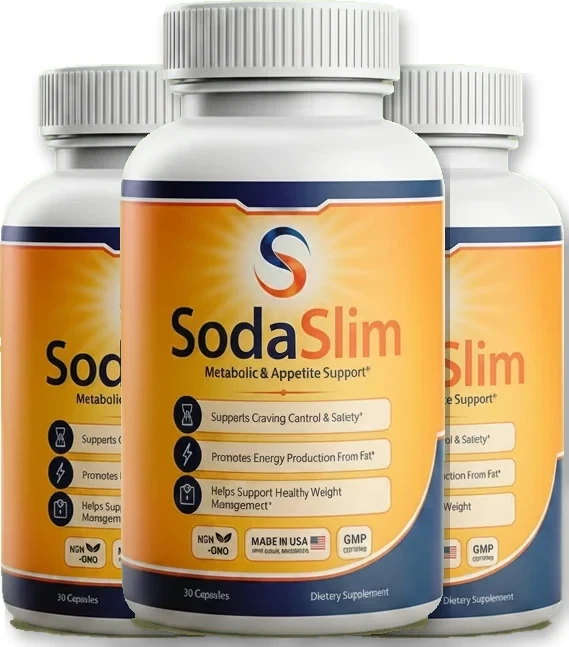
SodaSlim names raspberry ketone and this desk claims nothing for it
Four of the five ingredients on this label have human trials behind them and one does not. The ingredients page prints the amount each of the four was studied at, and records the refusal on the fifth.
Two bottles $158 · six bottles $294 · 60-day money-back guarantee
Order SodaSlim On The Official WebsiteOne capsule each morning · 30 per bottle · lot SOD-26/SO-1634
Why it is on so many labels anyway
Three reasons, and none of them is a conspiracy.
It is cheap and it smells pleasant
Raspberry ketone is a bulk flavour chemical produced at industrial scale. It costs very little, it is stable, and it has a long history of safe use as a flavouring. From a formulator's point of view it is easy to include.
The name does real work on a front panel
Raspberry is a word with good associations. It reads as fruit, as natural, as pleasant, and it photographs well beside a bottle. Several of the ingredients with the best evidence in this category are named after chemicals, which is a harder sell on a label.
The mechanism is easy to draw
Increased lipolysis in fat cells is a satisfying thing to describe. It has a direction, it has a diagram, and it sounds like exactly what somebody buying a metabolism supplement wants. That the demonstration was in isolated rat cells is a detail that falls out of most retellings.
- Was the evidence in people, or in animals or cells?
- If in animals, was the exposure a dose or a percentage of the diet?
- Is there a single-ingredient human trial, or only a multi-ingredient one?
How to read an ingredient with no evidence
The temptation is to treat an unevidenced ingredient as a scandal, and that is an overreaction. A more useful reading has three parts.
First, it is not a safety problem in itself. Raspberry ketone has a long history as a flavouring at low levels and nothing in the literature suggests an amount a capsule delivers is hazardous. The absence of evidence here is about efficacy, not risk.
Second, it does tell you something about the formula around it. An ingredient chosen for its name rather than its evidence suggests a product designed at least partly by its front panel, and that is worth knowing when weighing the rest of the list.
Third, it should be excluded from your expectations entirely. Whatever you decide about a formula containing it, decide on the basis of the other ingredients, because this one has nothing to contribute to the calculation in either direction.
It makes no claim for the raspberry ketone row on the bottle it sells, and records that refusal in its own citation file alongside the sources. A refusal is a finding about the evidence and it belongs beside the evidence.
The wider habit is worth keeping. Every ingredient family in this category has at least one member whose reputation rests on rodent work at an untranslatable exposure, and the metabolism supplement guide on this website sets out which of the six families that applies to.
References
- Morimoto C, Satoh Y, Hara M, et al. Anti-obese action of raspberry ketone. Life Sci. 2005;77(2):194-204. PMID 15862604. https://pubmed.ncbi.nlm.nih.gov/15862604/
- Yao Z, Zhang Y, Wu H. Ameliorative Effect of Raspberry Ketone on Hypothalamic Inflammation in High Fat Diet-Induced Obese Mice. J Nutr Sci Vitaminol (Tokyo). 2024;70(6):496-502. PMID 39756970. https://pubmed.ncbi.nlm.nih.gov/39756970/
- Arent SM, Walker AJ, Pellegrino JK, et al. The Combined Effects of Exercise, Diet, and a Multi-Ingredient Dietary Supplement on Body Composition and Adipokine Changes in Overweight Adults. J Am Coll Nutr. 2018;37(2):111-120. PMID 29111889. https://pubmed.ncbi.nlm.nih.gov/29111889/
- Heymsfield SB, Allison DB, Vasselli JR, et al. Garcinia cambogia (hydroxycitric acid) as a potential antiobesity agent: a randomized controlled trial. JAMA. 1998;280(18):1596-600. PMID 9820262. https://pubmed.ncbi.nlm.nih.gov/9820262/
- Kanchanasurakit S, Saokaew S, Phisalprapa P, et al. Chlorogenic acid in green bean coffee on body weight: a systematic review and meta-analysis of randomized controlled trials. Syst Rev. 2023;12(1):163. PMID 37710316. https://pubmed.ncbi.nlm.nih.gov/37710316/