SodaSlim Official Website › Blog › Green Tea And Food
Green Tea Extract: Why Not On An Empty Stomach
The United States Pharmacopeia asks green tea extract labels to say
do not take on an empty stomach
. That instruction is not generic caution: it comes
out of a systematic review of liver injury, and it matters most on exactly the kind of
product people swallow before breakfast.
The instruction, and where it comes from
the United States Pharmacopeia review is a systematic review of green tea extract hepatotoxicity carried out by an expert panel for the United States Pharmacopeia, published in Toxicology Reports in 2020. The panel included members of the Drug Induced Liver Injury Network and a liaison from the Food and Drug Administration.
Its conclusion produced a specific piece of labelling. The USP added a cautionary requirement to its Powdered Decaffeinated Green Tea Extract monograph reading, in full: do not take on an empty stomach, take with food, do not use if you have a liver problem, and discontinue use and consult a healthcare practitioner if you develop symptoms of liver trouble such as abdominal pain, dark urine or jaundice.
That is unusually specific for a supplement caution. Most cautions name no symptom and no circumstance. This one names four symptoms and a meal.
Why fasting changes the picture
The mechanism is the interesting part and it explains why the instruction is about food rather than about dose alone.
Catechins taken with food are absorbed relatively modestly. Taken as a concentrated dose on an empty stomach, absorption rises substantially, and the review attributes this to saturation of the first-pass elimination mechanisms that would otherwise clear much of the dose before it reaches the circulation.
So the same capsule, taken at two different moments, produces two different exposures. That is not true of most supplements and it is why the timing instruction carries weight that a generic one would not.
| What the USP review found | Why it matters to a daily capsule |
|---|---|
| Repeated bolus doses during fasting substantially raise catechin bioavailability | A capsule taken before breakfast is the definition of a bolus dose during fasting |
| The injury pattern in the toxicological studies is hepatocellular | It affects liver cells directly rather than the bile ducts, which shapes the symptoms |
| Case reports associate hepatotoxicity with EGCG intakes from about 140 mg a day upward | That is not a high figure. A moderately dosed extract reaches it |
| Susceptibility varies substantially between individuals, possibly genetically | There is no way to know in advance which group you are in |
| Solvent, pesticide, alkaloid and elemental impurities were investigated and not implicated | The catechins themselves are the subject, not contamination |
| A cautionary labelling requirement was added to the USP monograph | It names the symptoms and the food instruction in plain words |
Six findings from the United States Pharmacopeia's systematic review, cited below and read in full before this article was written.
Read the first row of that table beside the design of an ordinary metabolism supplement and the relevance is obvious. A once-daily capsule taken in the morning, for appetite support, is precisely the product somebody swallows on waking with a glass of water. That is the fasted bolus the review is about.
The numbers in the review, read carefully
Two figures are worth holding on to and both need context.
The first is 140 mg a day of EGCG. That is the bottom of the range the review reports for adverse-event cases, and it is not a large amount. A green tea extract standardised to 50 per cent EGCG reaches it at 280 mg of extract.
The second is 843 mg a day of EGCG, which is the amount used in the Minnesota Green Tea Trial. the Minnesota Green Tea Trial analysis analysed liver enzyme changes in that trial across genotypes and found one variant associated with much larger rises in alanine aminotransferase at six and nine months than another. Susceptibility genuinely differs between people and there is no practical way to know which group you are in.
- 140 mg a day of EGCG: the low end of the adverse-event range reported by the USP review.
- 270 mg a day of EGCG: the amount used in the respiratory chamber study behind this ingredient's metabolic reputation, the 1999 respiratory-chamber study.
- 843 mg a day of EGCG: the amount used in the twelve-month Minnesota trial.
- An unprinted amount: what a label with no panel gives you to work with.
The awkward feature of that list is that the metabolic amount and the low end of the adverse-event range are not far apart. This is not an ingredient where the useful dose sits comfortably below the cautionary one, and that is the honest reason the food instruction is worth following rather than noting.
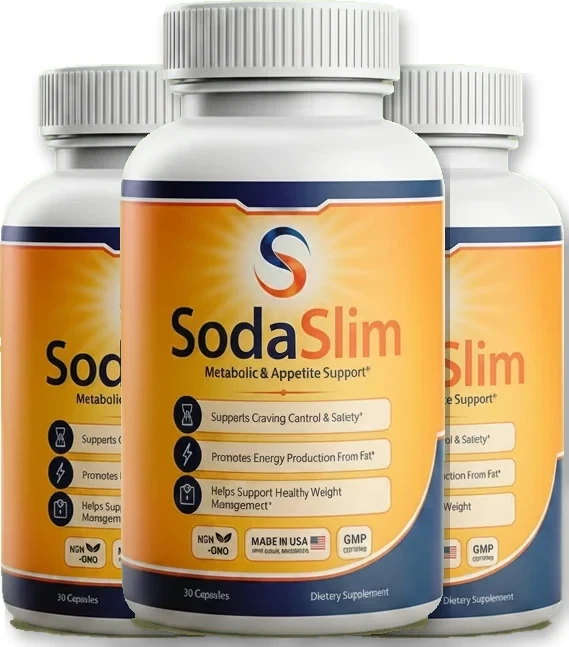
SodaSlim is a morning capsule containing green tea extract
Take it with food rather than before breakfast. The how to use page sets out the four rules, and this one is the only instruction on it that comes from an outside body rather than from the bottle.
Two bottles $158 · six bottles $294 · 60-day money-back guarantee
Order SodaSlim On The Official WebsiteOne capsule each morning · 30 per bottle · lot SOD-26/SO-1634
Keeping the risk in proportion
Everything above would be alarming if it were not set against the scale of use, so it is worth being clear about that.
Green tea extract is consumed by an enormous number of people. The adverse events in the case literature are rare in absolute terms, and the review found no evidence implicating solvent residues, pesticide residues, pyrrolizidine alkaloids or elemental impurities, which rules out several of the usual explanations for supplement-associated injury.
What the review does establish is that the events happen, that they are hepatocellular, that bioavailability during fasting is a contributing factor, and that individual susceptibility varies. From a reader's point of view those four facts add up to one cheap precaution and one symptom list worth memorising.
It is also worth noting where the efficacy evidence sits, because a risk is only ever weighed against a benefit. the Cochrane review reviewed green tea preparations for weight loss and maintenance and concluded that the weight loss was small, statistically non-significant and unlikely to be clinically important. That is the other half of the calculation and it belongs in the same paragraph.
The interaction nobody expects
One more finding deserves its own section because it is genuinely surprising and because it affects a common prescription.
a 2025 review of catechin drug interactions reviewed green tea catechins as perpetrators of pharmacokinetic drug interactions, and the picture is broader than most people assume. Catechins affect the transporters and enzymes involved in absorbing several drug classes.
a nadolol case report is the clearest single example: a published case report in which green tea reduced the absorption of nadolol, a beta blocker, to the point of therapeutic ineffectiveness. A medicine that does not work is a different kind of problem from a side effect, and it is much harder to notice.
Anyone taking a beta blocker, anyone on a medicine where timing or absorption is known to matter, and anyone already managing a liver condition. The conversation takes a minute and it cannot be had usefully afterwards.
What to do about it, practically
Five situations cover almost everything, and the responses are all simple.
| Situation | What changes | What to do |
|---|---|---|
| Taking it before breakfast | Fasting raises catechin absorption sharply | Move it to the meal, not the hour before it |
| Taking it with a beta blocker | Catechins reduced nadolol absorption in a case report | Raise it with whoever prescribed it |
| Taking it alongside another green tea product | Two sources of EGCG add together toward the same figure | Count both, or drop one |
| Taking it during a period of poor appetite or dieting hard | Less food means a more fasted state at the time of the dose | Attach it to the largest meal of the day |
| Noticing dark urine, abdominal pain or yellowing | These are the symptoms the USP monograph names | Stop, and speak to a doctor |
Five situations that change how a green tea extract behaves, and the response to each.
The single most useful habit
Attach the capsule to the largest meal of the day rather than to the earliest moment of it. On most people's schedule that is breakfast itself rather than the fifteen minutes before breakfast, and the difference between those two is the whole of the instruction.
The symptom list worth memorising
Abdominal pain, dark urine, unusual fatigue, loss of appetite, nausea that does not settle, and any yellowing of the skin or the whites of the eyes. Those are the words the USP monograph uses, and they are worth knowing whether or not you take a green tea extract, because several other common supplements carry the same caution.
- Take it with food, never before a meal.
- The metabolic amount and the low end of the caution range are close together.
- Susceptibility varies between people and cannot be predicted.
- It has documented interactions with several drug classes, including a beta blocker.
- Stop and speak to a doctor if the liver symptoms above appear.
The how to use page on this website carries the food instruction as one of four rules, and the side effects page sets out the full liver section for both of the ingredients on this label that carry one.
References
- Oketch-Rabah HA, Roe AL, Rider CV, et al. United States Pharmacopeia (USP) comprehensive review of the hepatotoxicity of green tea extracts. Toxicol Rep. 2020;7:386-402. PMID 32140423. https://pubmed.ncbi.nlm.nih.gov/32140423/
- Acosta L, Byham-Gray L, Kurzer M, et al. Hepatotoxicity with High-Dose Green Tea Extract: Effect of Catechol-O-Methyltransferase and Uridine 5'-Diphospho-glucuronosyltransferase 1A4 Genotypes. J Diet Suppl. 2023;20(6):850-869. PMID 36178169. https://pubmed.ncbi.nlm.nih.gov/36178169/
- Dulloo AG, Duret C, Rohrer D, et al. Efficacy of a green tea extract rich in catechin polyphenols and caffeine in increasing 24-h energy expenditure and fat oxidation in humans. Am J Clin Nutr. 1999;70(6):1040-5. PMID 10584049. https://pubmed.ncbi.nlm.nih.gov/10584049/
- Jurgens TM, Whelan AM, MacDonald L, et al. Green tea for weight loss and weight maintenance in overweight or obese adults. Cochrane Database Syst Rev. 2012;12(12):CD008650. PMID 23235664. https://pubmed.ncbi.nlm.nih.gov/23235664/
- Kyriacou NM, Gross AS, McLachlan AJ. Green Tea Catechins as Perpetrators of Drug Pharmacokinetic Interactions. Clin Pharmacol Ther. 2025;118(1):45-61. PMID 39748104. https://pubmed.ncbi.nlm.nih.gov/39748104/
- Facile A, Bacle A, Le Corre P. Green tea and nadolol interaction: A risk of therapeutic inefficiency, a case report and extensive review. Therapie. 2024;79(4):482-485. PMID 37951784. https://pubmed.ncbi.nlm.nih.gov/37951784/