SodaSlim Official Website › Blog › Green Coffee And A Retraction
Green Coffee Bean Extract And The Study That Was Retracted
In 2012 a sixteen-person crossover study reported eight kilograms of weight loss from green coffee bean extract. It made the ingredient famous, it was retracted in 2014, and the figure is still repeated. Here is what the surviving evidence actually supports, which is smaller and more useful.
What green coffee bean extract is
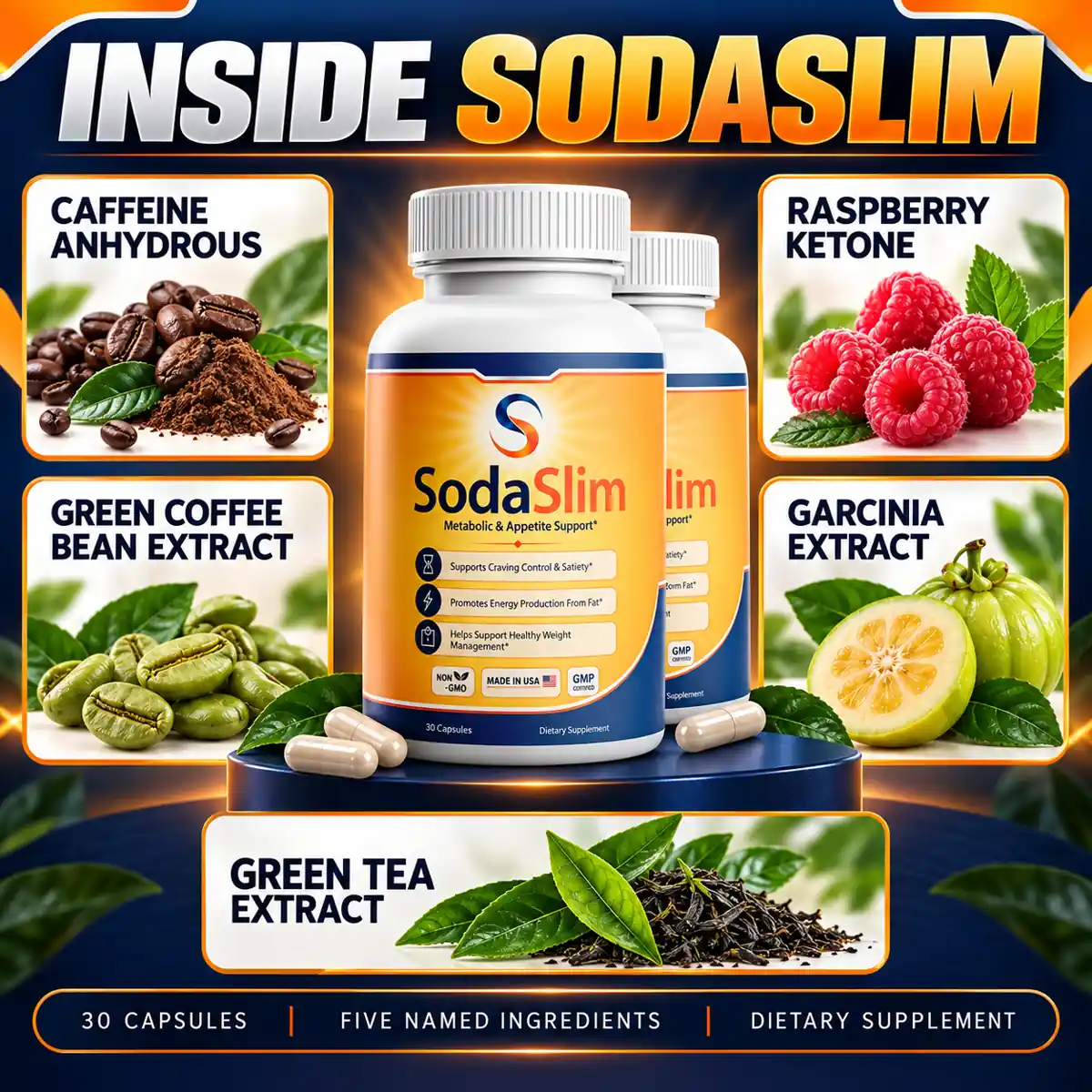
Coffee beans that have not been roasted. That is the whole of it.
Roasting develops the flavour compounds that make coffee taste like coffee, and in the process it destroys a large share of the chlorogenic acids present in the raw bean. An extract made from green beans keeps them, and those acids are the reason the ingredient exists as a supplement rather than as a drink.
Green coffee extract also carries caffeine unless it has been decaffeinated, which matters on any label where a second row already supplies some. Several of the better trials used a decaffeinated extract specifically so that the caffeine would not confound the result.
The 2012 study and the 2014 retraction
the retracted 2012 crossover study was published in Diabetes, Metabolic Syndrome and Obesity in 2012. Sixteen overweight adults took a commercial green coffee extract at 700 mg or 1,050 mg a day, or placebo, across a twenty-two week crossover with washout periods. The paper reported a mean weight reduction of 8.04 kg, a body mass index reduction of 2.92, and a 4.44 per cent fall in body fat.
Eight kilograms in sixteen people is an extraordinary result for a supplement, and it was reported as such. The study was promoted heavily, the ingredient became one of the best-selling supplements of the decade, and the figure entered the general stock of things everybody knows.
In October 2014 the journal published a retraction. The paper is still indexed and still readable, and its record carries the retraction notice, which is exactly how the system is supposed to work.
A retracted study is not deleted. It remains in the literature with a notice attached, so that anybody who cited it can see what happened and anybody encountering a claim traced to it can check. That is why looking up the record is worth the thirty seconds it takes.
It is worth adding that the concern about this evidence base predates the retraction. a 2011 systematic review, a systematic review published in 2011, had already described the existing trials as methodologically poor and called for better ones.
What the surviving evidence shows
The current best summary is a 2023 chlorogenic acid meta-analysis, published in Systematic Reviews in 2023. It pooled three randomised controlled trials covering 103 people, all using chlorogenic acid at 500 mg a day or more, and found a weighted mean difference in body weight of 1.30 kg against placebo.
Two details make that finding more trustworthy than its size suggests. There was no heterogeneity between the studies, which means they agreed with one another rather than averaging out to a number nobody measured. And the tests for publication bias came back clean.
One and a third kilograms is a small effect. It is also a real one, arrived at honestly, and it is what a reader should have in mind rather than the retracted figure.
| The 2012 crossover study | The 2023 meta-analysis | |
|---|---|---|
| People | 16 overweight adults | 103 people across three randomised trials |
| Design | 22-week crossover, three treatment periods | Pooled randomised controlled trials |
| Amount | 700 mg or 1,050 mg of a commercial extract | 500 mg a day or more of chlorogenic acid |
| Weight change reported | 8.04 kg | 1.30 kg against placebo |
| Status | Retracted in 2014 | Published and standing |
| What it supports today | Nothing | A small, consistent effect with no heterogeneity between studies |
Both records were retrieved and read. The 2012 paper carries a retraction notice published in the same journal in October 2014.
Individual trials fill in the shape. an eight-week metabolic-syndrome trial gave 400 mg of a decaffeinated extract twice daily for eight weeks to people with metabolic syndrome and saw systolic blood pressure, fasting glucose, waist circumference and self-reported appetite all fall, with weight change that was marginal. That is a trial finding several things at once, which is more interesting than a single dramatic number.
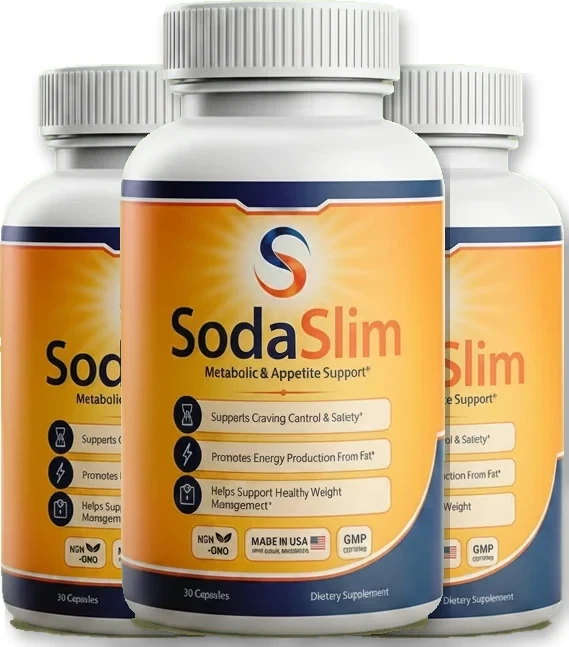
SodaSlim names green coffee bean extract and prints no amount
The pooled trials used 500 mg of chlorogenic acid a day. This label carries no Supplement Facts panel and no standardisation figure, which the ingredients page says plainly.
Two bottles $158 · six bottles $294 · 60-day money-back guarantee
Order SodaSlim On The Official WebsiteOne capsule each morning · 30 per bottle · lot SOD-26/SO-1634
What chlorogenic acid was actually measured doing
The sentence that appears on most sales pages is that green coffee extract reduces the absorption of sugars and carbohydrates. What was measured is narrower.
an acute glucose-response study gave healthy volunteers coffee preparations with and without chlorogenic acid and caffeine, then tracked glucose and gut-hormone responses. Chlorogenic acid changed the shape of that response over the following hours. That is an acute metabolic effect from a single drink, and it is a long way from a claim about how much of a meal ends up absorbed across a day.
| The claim usually made | What was actually measured | The gap |
|---|---|---|
| It blocks carbohydrate absorption | A single chlorogenic-acid drink changed the shape of the glucose and gut-hormone response over the following hours | A change in response shape is not a block, and it was measured acutely |
| It burns fat | Weight and body composition endpoints in eight to twelve week trials | The pooled difference is 1.30 kg, which is real and small |
| It works because coffee is unroasted | Roasting destroys much of the chlorogenic acid content | True as a reason for using green beans; it says nothing about the effect size |
| It produced eight kilograms of loss | That figure comes from the retracted study | It should not appear in any current description of this ingredient |
Four claims that circulate about green coffee bean extract, each set against the published measurement behind it.
The pattern in that table is the one worth learning. In each row the underlying measurement is real, narrower than the claim, and made under conditions that do not quite match how the product is used. That is how most supplement marketing is built, and noticing it does not require any scientific training.
The third row is the subtlest of the four and the easiest to nod along with. It is perfectly true that roasting destroys chlorogenic acids and that this is why green beans are used. It is also an explanation of a manufacturing choice rather than a result, and it arrives in most sales copy exactly where a result should be. A sentence that explains why something was done is not a sentence about what it does, and the two read almost identically at a glance.
Why a standardisation figure decides everything
This is the practical part, and it applies to every green coffee product on sale.
An extract is a process applied to a plant, not a substance. Two products both labelled 500 mg of green coffee bean extract can differ several-fold in chlorogenic acid content depending on how they were made.
The trials pooled above dosed on the acid, not on the extract. 500 mg a day of chlorogenic acid from an extract standardised to 50 per cent means a gram of extract; from one standardised to 10 per cent it means five grams, which no capsule holds.
- A label reading green coffee bean extract 400 mg tells you almost nothing.
- A label reading green coffee bean extract 400 mg, standardised to 50% chlorogenic acids tells you 200 mg of acid.
- A label with no amount at all tells you less than either.
- The trial figure to compare against is 500 mg a day of chlorogenic acid.
- The weight of extract per serving.
- The standardisation percentage for chlorogenic acids.
- The number of servings a day, because the trial figure is a daily one.
How to read a category with a retraction in its history
Green coffee is not unusual in having a famous result that did not survive. Most supplement categories have one, and the pattern is consistent enough to be useful.
A small, dramatic early study attracts attention. The ingredient becomes popular. Larger or better-conducted work follows and finds something much smaller or nothing at all. The original figure keeps circulating because it is the memorable one.
Three habits protect a reader from this without requiring any expertise.
- Prefer a pooled analysis to a single study. A meta-analysis of three trials is less exciting and more reliable than one crossover in sixteen people.
- Look at the number of participants. Sixteen is small enough that one unusual responder moves the average substantially.
- Check whether the paper is still standing. A retraction notice appears on the record and takes seconds to see.
None of that means green coffee bean extract does nothing. The pooled evidence says it does something small at 500 mg a day of chlorogenic acid, which is a more honest and more useful statement than either the retracted figure or a blanket dismissal. The ingredients page sets that figure against what this desk's own product prints, which is nothing.
References
- Vinson JA, Burnham BR, Nagendran MV. Randomized, double-blind, placebo-controlled, linear dose, crossover study to evaluate the efficacy and safety of a green coffee bean extract in overweight subjects. Diabetes Metab Syndr Obes. 2012;5:21-7. RETRACTED. PMID 22291473. https://pubmed.ncbi.nlm.nih.gov/22291473/
- Kanchanasurakit S, Saokaew S, Phisalprapa P, et al. Chlorogenic acid in green bean coffee on body weight: a systematic review and meta-analysis of randomized controlled trials. Syst Rev. 2023;12(1):163. PMID 37710316. https://pubmed.ncbi.nlm.nih.gov/37710316/
- Onakpoya I, Terry R, Ernst E. The use of green coffee extract as a weight loss supplement: a systematic review and meta-analysis of randomised clinical trials. Gastroenterol Res Pract. 2011;2011:382852. PMID 20871849. https://pubmed.ncbi.nlm.nih.gov/20871849/
- Roshan H, Nikpayam O, Sedaghat M, et al. Effects of green coffee extract supplementation on anthropometric indices, glycaemic control, blood pressure, lipid profile, insulin resistance and appetite in patients with the metabolic syndrome: a randomised clinical trial. Br J Nutr. 2018;119(3):250-258. PMID 29307310. https://pubmed.ncbi.nlm.nih.gov/29307310/
- Johnston KL, Clifford MN, Morgan LM. Coffee acutely modifies gastrointestinal hormone secretion and glucose tolerance in humans: glycemic effects of chlorogenic acid and caffeine. Am J Clin Nutr. 2003;78(4):728-33. PMID 14522730. https://pubmed.ncbi.nlm.nih.gov/14522730/