SodaSlim Official Website › Blog › Counting Caffeine
Counting Caffeine You Cannot See
Healthy adults have a daily caffeine figure to stay inside, and a great many supplements carry caffeine in two rows rather than one. When neither row is quantified, the usual arithmetic stops working. This is how to budget a caffeine day around a dose nobody has published.
The number to stay under, and where it comes from
Four hundred milligrams a day, from every source combined, for healthy adults.
That figure comes from the 2017 systematic review of caffeine safety, a 2017 systematic review that screened more than five thousand articles and assessed 381 of them across five outcome categories in four populations. Its conclusion was that consumption of up to 400 mg of caffeine a day in healthy adults is not associated with overt adverse cardiovascular, behavioural, reproductive, developmental, acute or bone effects.
It was written as an update to the Health Canada review, the Health Canada review published in 2003, which had reached the same place. Two independent assessments fourteen years apart arriving at the same number is about as much agreement as this kind of question ever produces.
The same review gives 300 mg a day for healthy pregnant women, and 2.5 mg per kilogram of body weight a day for children and adolescents. The last of those is a per-kilogram figure, which is one reason no capsule is appropriate for a person under 18.
Why two rows on one label both carry caffeine
This catches people out constantly, and it is worth spelling out.
Caffeine anhydrous is the obvious row. It is purified caffeine in dried powder form, chemically identical to what is in coffee, and it appears on a label under that name precisely because it is the caffeine.
The less obvious rows are the botanicals. Green tea extract carries caffeine unless it has been decaffeinated. Green coffee bean extract does too, for the same reason. So do guarana, yerba mate, kola nut and several others that appear regularly in this category.
- Caffeine anhydrous: caffeine, by definition.
- Green tea extract: carries caffeine unless the label says decaffeinated.
- Green coffee bean extract: carries caffeine unless the label says decaffeinated.
- Guarana: one of the highest natural caffeine contents of any plant.
- Yerba mate and kola nut: both caffeine-bearing, both common in blends.
A formula with caffeine anhydrous and green tea extract has two caffeine rows. A formula with caffeine anhydrous, green tea and green coffee has three. The total is what matters and the total is the sum, which means a label that quantifies one row and not the others has still not answered the question.
Building a caffeine budget you can actually keep
The arithmetic is worth doing once, on paper, rather than worrying about it every morning.
| Source | Typical caffeine | What it leaves of a 400 mg day |
|---|---|---|
| A 350 ml mug of filter coffee | 95 to 165 mg | About 250 mg after one |
| A double espresso | 120 to 130 mg | About 130 mg after a second drink |
| A mug of black tea | 40 to 70 mg | Roughly 70 mg remaining |
| A 500 ml energy drink | 140 to 160 mg | A third of the day in one can |
| A supplement capsule with caffeine anhydrous | Whatever the label says | Unknowable where the label says nothing |
The first four rows are ordinary published ranges for common drinks, given so the fifth row has something to sit against.
Two mugs of coffee and a tea is most of a healthy adult's allowance before anything else is counted. That is not a warning; it is simply the arithmetic, and it surprises most people who have never done it.
The practical conclusion is that a caffeine-containing supplement should replace a drink rather than join one. Deciding in advance which drink it replaces turns a vague worry into a rule you can keep without thinking about it.
- Total your ordinary day, honestly, including anything after lunch.
- Subtract that from 400 mg, or from 300 mg in pregnancy.
- Decide which drink the capsule replaces rather than joins.
- Hold the whole total before mid-afternoon.
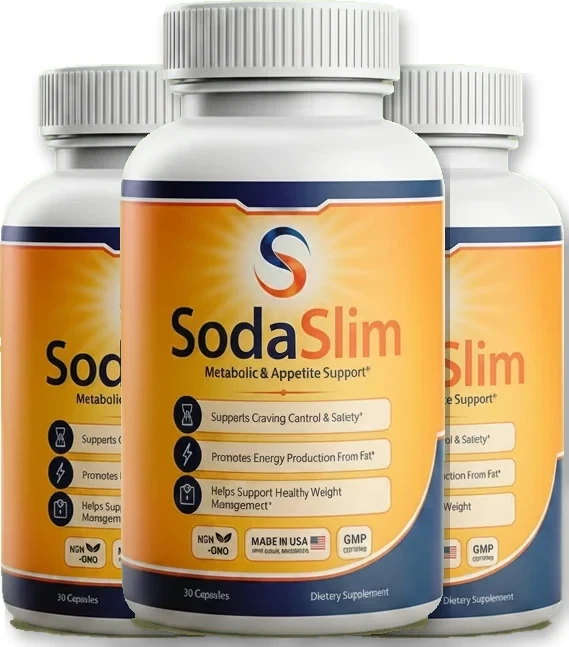
SodaSlim carries caffeine in two rows and prints no amount for either
One capsule each morning, with food. This desk will not estimate a caffeine figure the label does not publish, and the side effects page sets out what that means in practice.
Two bottles $158 · six bottles $294 · 60-day money-back guarantee
Order SodaSlim On The Official WebsiteOne capsule each morning · 30 per bottle · lot SOD-26/SO-1634
What happens at the edges of that budget
Five consequences are well enough documented to plan around, and each has an obvious response.
| Effect | What the evidence shows | What to do about it |
|---|---|---|
| Sleep disturbance | Both dose and hours before bed decide it, in pooled crossover trials | Take a caffeine-containing supplement in the morning and nowhere else in the day |
| Raised blood pressure | A measurable rise across the supplementation dose range studied | Anyone managing blood pressure should raise it with a clinician first |
| Anxiety symptoms | Pronounced in people with panic disorder; variable in everyone else | Anyone who already notices caffeine in this way should treat an unquantified dose as a reason to decline |
| Withdrawal headache | Measured in regular coffee drinkers after acute withdrawal | Taper rather than stopping a daily habit abruptly |
| Tolerance to the subjective lift | Develops over days of regular use | Expect the noticeable part to fade, and do not increase the dose to chase it |
Five consequences of caffeine that a reader can plan around, and one thing that makes planning harder: an unprinted amount.
Sleep is the one that shows up first
a 2025 meta-analysis of caffeine and sleep pooled controlled crossover trials and found the disturbance depends on both how much and how late. That is why a morning instruction on a caffeine-containing supplement is not a formality: it is the single variable most within a person's control.
Practically, a change in sleep in the first week of taking something is the clearest possible signal that the stimulant load does not suit you. It arrives quickly, it is easy to notice, and it is worth acting on rather than pushing through.
Blood pressure and anxiety are the two to raise with a clinician
a 2023 blood-pressure meta-analysis pooled the supplementation trials and found a measurable rise in blood pressure across the dose range studied. a meta-analysis in panic disorder examined caffeine in people with panic disorder, where sensitivity is far above average.
Neither finding makes caffeine dangerous for a healthy adult. Both are reasons why somebody already managing either condition should have the conversation before starting rather than afterwards.
Budgeting around an amount nobody published
So what do you actually do when a label carries two caffeine rows and quantifies neither?
Three approaches, in descending order of preference.
- Ask. Call the seller's order desk and ask for the caffeine content of one serving. A desk that answers has settled it. A desk that declines has told you something too.
- Assume the top of the plausible range. Most single-capsule stimulant formulas sit somewhere between 50 and 200 mg. Budgeting as though it were 200 mg is conservative, costs you one cup of coffee, and cannot be wrong in the dangerous direction.
- Start on a quiet day. Take the first capsule on a day when you can notice how you feel, with less caffeine than usual around it, rather than in the middle of a busy week.
The second of those is the one most people should use. It is not precise, and precision is not available, but it errs in the direction that cannot hurt you.
There is a fourth approach that people reach for and it does not work: looking up what a similar-sounding product contains and assuming the same. Formulas in this category vary from about 50 mg to well over 200 mg of caffeine in a single capsule, with no relationship between the front panel and the figure, so a number borrowed from a different bottle is a guess wearing a decimal point. An honest range is more useful than a false figure, which is why the second approach above is written as a ceiling rather than as an estimate.
Stopping, and why it deserves a plan
Anyone who has taken a daily caffeine-containing capsule for a couple of months and then stops abruptly is running an acute withdrawal experiment on themselves. a 2026 withdrawal study measured headache in regular coffee drinkers after exactly that, and the effect is consistent enough to plan around.
The plan is trivial: taper over a few days rather than stopping on a Friday. Take the capsule every other day for a week, or keep the coffee while dropping the capsule, and the headache usually does not arrive at all.
This matters more than it sounds, because a withdrawal headache in the days after stopping a supplement is easy to read as evidence that the supplement was doing something. It is evidence that it contained caffeine.
Count the capsule inside your caffeine day, take it early, assume the high end of the plausible range where no figure is published, and taper rather than stopping abruptly.
Everything above applies to any stimulant supplement, not to one product. The side effects page on this website works through what it means for the bottle this desk sells, including the interactions that follow from the other four names on its label.
References
- Wikoff D, Welsh BT, Henderson R, et al. Systematic review of the potential adverse effects of caffeine consumption in healthy adults, pregnant women, adolescents, and children. Food Chem Toxicol. 2017;109(Pt 1):585-648. PMID 28438661. https://pubmed.ncbi.nlm.nih.gov/28438661/
- Nawrot P, Jordan S, Eastwood J, et al. Effects of caffeine on human health. Food Addit Contam. 2003;20(1):1-30. PMID 12519715. https://pubmed.ncbi.nlm.nih.gov/12519715/
- Chang YH, Yang HL, Hsu YH, et al. Age- and dose-specific effects of caffeine on sleep: A meta-analysis of controlled crossover trials. Sleep Med. 2025;136:106874. PMID 41124973. https://pubmed.ncbi.nlm.nih.gov/41124973/
- Abbas-Hashemi SA, Hosseininasab D, Rastgoo S, et al. The effects of caffeine supplementation on blood pressure in adults: A systematic review and dose-response meta-analysis. Clin Nutr ESPEN. 2023;58:165-177. PMID 38057002. https://pubmed.ncbi.nlm.nih.gov/38057002/
- Randa L, Elzahaf RA, Mahgob A, et al. Acute effects of caffeine withdrawal on headache among regular caffeinated coffee drinkers. Sci Rep. 2026;16(1). PMID 42174033. https://pubmed.ncbi.nlm.nih.gov/42174033/
- Klevebrant L, Frick A. Effects of caffeine on anxiety and panic attacks in patients with panic disorder: A systematic review and meta-analysis. Gen Hosp Psychiatry. 2022;74:22-31. PMID 34871964. https://pubmed.ncbi.nlm.nih.gov/34871964/